Hello to you all wonderful, beautiful people!
In the past 4 weeks of April, we have brought you topics on logic and how to feature it in your story. From archetypes leading to inherent logic, to practical application of logic in your works, the posse at Royal Blush has been working on many fronts.
But, we have only started to scrape at what logic means and implies in a story.
Catch us in May as we bring you more in-depth tips and know-how where logic is concerned. Characterization, world-building, set-up, plot arc, character fulfilment and realization... We have all this and more on the agenda for you.
Starting May 4, the second wave of logic will be rolling at the blog of the Royal Blush Authors. Don't miss it!
For this week, well, let's just say we're giving you all a little break to assimilate and ponder all we've bombarded you with so far! The posse will also take a much-needed breather to come back even more refreshed and raring to go!
Our quest for logic is not over, far from it!
The best of us for the best of you, that's our promise as we deliver the full flush of romance.
From now till later, enjoy!
With love, from Ms. Blush
Tuesday, April 28, 2009


Wednesday, April 22, 2009
Acting up
I remember when I was a teenager and I needed something, I'd got to my dad and ask. Well, what do you expect? Teenagers do live on daddy's money, innit? Well, I asked, and I got it.
Today, I am what is known as a housewife. I work part-time and am pretty much financially independent, but that doesn't cover every purchase I need to make. Like that new, bigger oven I've been wanting. So, I go the the husband and ask, and I usually get what I want.
You might think I'm a man-manipulator. To a certain extent, that's true. You need to know how to tackle/handle situations. With my dad, the big-eyes-like-Puss-in-Boots-from-Shrek2 worked wonders. Not so with the hubby - a logical explanation and a clear balance sheet would most probably win me my endeavour. On my boys, a glare generally works.
So what am I getting at? In dealing with these 3 types of men, I am the same woman, the same character in the story of my life, but I show/use/display different facets with every one of them. I know what 'logically' works on every one of them to get me my goal.
Every life is a story in itself, and every person is the actor acting his/her part out. True - you may not always know the scenario and it's almost always improvisation. But even in improvisation, you need logic. This is no different from any story you're writing, even though you as the writer should, logically, know the scenario of your story and how your chaarcters/actors are supposed to play their parts.
So what is logical and what's not where emotions are concerned? T.J. mentioned the aspect pertaining to archetypes, and how each archetype is logically expected to act in a situation. My answer to the above question is -
There is no better way to get this right than by knowing your characters.
I stress the plural on the word - knowing your main character, the heroine, is good - you know how she will act. Fine. But acting is not a one-way street, and it is always an interpersonal interaction. You act in relation to other people too. Know those other people as well as you know your heroine.
Let's take, again, the Nurturer. Thus, when she will take on the stoic banker, she will be professional, not an insipid, crying and bailing-her-heart-out wimpy creature even if that's how she feels inside because she isn't used to tackling hard situations as she always "fixes". When she takes on the tough-as-nails, cynical hero, she won't be commanding that he do this and he do that. She'll work him through emotion, through an indirect approach that will slowly work a way into his heart, because she fixes broken things and the best approach to do that is through patience and little gestures (these are aspects/characteristics tied to a Nurturer archetype).
You can also work through preconceptions, stereotypes and the like as the starting point of your 'logical' approach. If you say (like my good gal pal and I discussed not too long ago *wink at her*) that 'all men have their mind in the gutter', know how much of your hero's mind is actually in said gutter. But this approach is tricky - you can easily fall into the trap of surface logic and cardboard-cutout-character-logic in this case.
Goodness, I really am clear as mud today, aren't I? And, in case you're wondering, I'm still pleading my case to get that new oven.
Any questions, feel free to holler!
Aasiyah Qamar - Cultural Romantic Fiction, With a Twist
Coming out October 2 - Light My World - Eirelander Publishing
Nolwynn Ardennes - the Promise of Fulfilment
Coming out in early 2010 - Storms in a Shot Glass - Eirelander Publishing
Aasiyah Qamar/Nolwynn Ardennes - Romance the world over
www.aasiyah-nolwynn.webs.com
Today, I am what is known as a housewife. I work part-time and am pretty much financially independent, but that doesn't cover every purchase I need to make. Like that new, bigger oven I've been wanting. So, I go the the husband and ask, and I usually get what I want.
You might think I'm a man-manipulator. To a certain extent, that's true. You need to know how to tackle/handle situations. With my dad, the big-eyes-like-Puss-in-Boots-from-Shrek2 worked wonders. Not so with the hubby - a logical explanation and a clear balance sheet would most probably win me my endeavour. On my boys, a glare generally works.
So what am I getting at? In dealing with these 3 types of men, I am the same woman, the same character in the story of my life, but I show/use/display different facets with every one of them. I know what 'logically' works on every one of them to get me my goal.
Every life is a story in itself, and every person is the actor acting his/her part out. True - you may not always know the scenario and it's almost always improvisation. But even in improvisation, you need logic. This is no different from any story you're writing, even though you as the writer should, logically, know the scenario of your story and how your chaarcters/actors are supposed to play their parts.
So what is logical and what's not where emotions are concerned? T.J. mentioned the aspect pertaining to archetypes, and how each archetype is logically expected to act in a situation. My answer to the above question is -
There is no better way to get this right than by knowing your characters.
I stress the plural on the word - knowing your main character, the heroine, is good - you know how she will act. Fine. But acting is not a one-way street, and it is always an interpersonal interaction. You act in relation to other people too. Know those other people as well as you know your heroine.
Let's take, again, the Nurturer. Thus, when she will take on the stoic banker, she will be professional, not an insipid, crying and bailing-her-heart-out wimpy creature even if that's how she feels inside because she isn't used to tackling hard situations as she always "fixes". When she takes on the tough-as-nails, cynical hero, she won't be commanding that he do this and he do that. She'll work him through emotion, through an indirect approach that will slowly work a way into his heart, because she fixes broken things and the best approach to do that is through patience and little gestures (these are aspects/characteristics tied to a Nurturer archetype).
You can also work through preconceptions, stereotypes and the like as the starting point of your 'logical' approach. If you say (like my good gal pal and I discussed not too long ago *wink at her*) that 'all men have their mind in the gutter', know how much of your hero's mind is actually in said gutter. But this approach is tricky - you can easily fall into the trap of surface logic and cardboard-cutout-character-logic in this case.
Goodness, I really am clear as mud today, aren't I? And, in case you're wondering, I'm still pleading my case to get that new oven.
Any questions, feel free to holler!
Aasiyah Qamar - Cultural Romantic Fiction, With a Twist
Coming out October 2 - Light My World - Eirelander Publishing
Nolwynn Ardennes - the Promise of Fulfilment
Coming out in early 2010 - Storms in a Shot Glass - Eirelander Publishing
Aasiyah Qamar/Nolwynn Ardennes - Romance the world over
www.aasiyah-nolwynn.webs.com
And in this corner....!
Logic!
Oh dear.
It's no secret, at least to my editors and crit group, that I have a problem with logical progression. It's not that I'll suddenly be on a boat when I should be in the living room of a Victorian home, but moving from one flow to another sometimes my mind sees it in what I've written, and no else does.
That's not a bad thing.
It makes me think. Causes me to have a deeper vision, a stronger picture to deliver in the telling of the story. I have to ask myself more questions, make more finite details, in less or more words or just write what I really meant to say. Sometimes I write too fast, or get too engrossed in my characters and dialogue to fill in the necessities. That's not a problem either. I mean, it's all fixable.
This post isn't about getting it right or getting it perfect as you write, or the magic elixir to give you that perfection. It's a personal look at a single person's writing style. And it's a very strong argument for needing a reading partner to go over your work to find those moments that are SO clear in your own mind, but make them go "huh?"
Because that's perfectly okay.
No one writes a perfect first draft. Even Nora Roberts has admitted that everyone needs editors. Logic is one of those points where I know I need someone else to read for me, to tell me when I've left out a singular (and likely clarifying as a microscope) narrative or transition because it's clear as mud to everyone but me.
So in truth, logic and I have a truce. We stay in our adjacent corners and I only get beat up as necessary, because believe me, we'll probably never be friends.
And I'm okay with that. I'd much rather have a tough crit or edit, than a string of rejections because of logic. It's an easy fix because no one knows the story better than the person who wrote it.
Tuesday, April 21, 2009
Archetypes, logic and emotional drive - oh my!
The past two months we spent a lot of time on archetypes. What are they and how do they apply to a story. Simply put, the archetypes give you a general set of guidelines for your characters.
If a Nurturer shows up in the middle of a battle, she’s not likely to take up a gun and start shooting. No, she’s more likely to hurry to the injured and comfort them. This in no way makes her a beta character. Her strength isn’t in her ability to fight; it’s her caring that makes her real. Nurturers by nature are ‘fixers’.
In fact, the Nurturer is the polar opposite of the Warrior. It’s why you see them coupled so much. One is the knight in shining armor that will maim or kill anybody who gets in the way of his duty whereas the other is the one who will clean up his mess.
Archetypes are important.
The emotional drive of the archetype is equally important.
Your characters should have ‘real to life’ emotions. That’s never been argued. They should shout when it’s appropriate and turn docile when the time comes to quiet down. Remember, draw your characters in a three dimensional way, it makes this easier. Also, try to understand your character’s motivations.
The one thing I see trip new authors up is putting logic to the emotional drive. That happens to everybody from time to time. The logic of emotions is progressive unless you have a spout off character who rules the world. This progression should fit the archetype.
A general example –
A Nurturer is thrown into the middle of a battle. Her emotional drive would most likely start at ‘horror’, ‘surprise’ or ‘fear’ (remember, she’s not a tom boy who will pick up the closest weapon or a boss who will begin spouting orders. She’s a fixer.) She’ll *probably* assess the situation quickly, and then get to work.
Throughout that scene, you can almost see how she will act. She won’t smile (one of my biggest pet-peeves is characters who smile when the situation doesn’t call for it). She might give off a horrified laugh. But inevitably, she’ll get the job done—her job. And, she’ll do so with the logical progression of emotions.
You can follow this method with any archetype, even blended ones. The trick here is when you blend write down when a certain aspect of their coupled archetype comes forward. Keep this in mind, at a plot point the main archetype always shines through.
Do you think this is really as important as I do? Do you think your reader will even care? Let me know.
Until next time, cheers and happy writing,
T.J.
If a Nurturer shows up in the middle of a battle, she’s not likely to take up a gun and start shooting. No, she’s more likely to hurry to the injured and comfort them. This in no way makes her a beta character. Her strength isn’t in her ability to fight; it’s her caring that makes her real. Nurturers by nature are ‘fixers’.
In fact, the Nurturer is the polar opposite of the Warrior. It’s why you see them coupled so much. One is the knight in shining armor that will maim or kill anybody who gets in the way of his duty whereas the other is the one who will clean up his mess.
Archetypes are important.
The emotional drive of the archetype is equally important.
Your characters should have ‘real to life’ emotions. That’s never been argued. They should shout when it’s appropriate and turn docile when the time comes to quiet down. Remember, draw your characters in a three dimensional way, it makes this easier. Also, try to understand your character’s motivations.
The one thing I see trip new authors up is putting logic to the emotional drive. That happens to everybody from time to time. The logic of emotions is progressive unless you have a spout off character who rules the world. This progression should fit the archetype.
A general example –
A Nurturer is thrown into the middle of a battle. Her emotional drive would most likely start at ‘horror’, ‘surprise’ or ‘fear’ (remember, she’s not a tom boy who will pick up the closest weapon or a boss who will begin spouting orders. She’s a fixer.) She’ll *probably* assess the situation quickly, and then get to work.
Throughout that scene, you can almost see how she will act. She won’t smile (one of my biggest pet-peeves is characters who smile when the situation doesn’t call for it). She might give off a horrified laugh. But inevitably, she’ll get the job done—her job. And, she’ll do so with the logical progression of emotions.
You can follow this method with any archetype, even blended ones. The trick here is when you blend write down when a certain aspect of their coupled archetype comes forward. Keep this in mind, at a plot point the main archetype always shines through.
Do you think this is really as important as I do? Do you think your reader will even care? Let me know.
Until next time, cheers and happy writing,
T.J.
Monday, April 20, 2009
With Love, from Ms. Blush
Hello to you all wonderful, beautiful people!
Once again, we're taking a closer look at logic. Last week we broached the overall arc of sense and sensibility. T.J. and Z(Aasiyah/Nolwynn) both went over the need for logic in the story, most precisely where the myths and the conventions of the genre is concerned.
This week, we're concerned more with sensibility. Yup, how sensible are you characters? How do they react? And more importatnt, how should they act?
Catch T.J. on Tuesday as she tells us more about the emotional logic behind your archetype. Yes, there is sense in there - catch her post and you'll see it.
On Thursday, Z will again bring her take on the matter. What is logical and what's not where emotions are concerned?
And, don't miss this one, for you're bound to be lol after reading it. Diana Castilleja is penning her opinion for us on Wednesday, on the topic of Logic. But, heck, logic and she are not acquainted! So how does the writer in her do it then?
Don't forget: This April, we're delving deep into the recesses of the true writing craft.
This April, we're on the quest:
Searching for the logic that actually makes sense...
The best of us for the best of you, that's our promise as we deliver the full flush of romance.
From now till later, enjoy!
With love, from Ms. Blush
Once again, we're taking a closer look at logic. Last week we broached the overall arc of sense and sensibility. T.J. and Z(Aasiyah/Nolwynn) both went over the need for logic in the story, most precisely where the myths and the conventions of the genre is concerned.
This week, we're concerned more with sensibility. Yup, how sensible are you characters? How do they react? And more importatnt, how should they act?
Catch T.J. on Tuesday as she tells us more about the emotional logic behind your archetype. Yes, there is sense in there - catch her post and you'll see it.
On Thursday, Z will again bring her take on the matter. What is logical and what's not where emotions are concerned?
And, don't miss this one, for you're bound to be lol after reading it. Diana Castilleja is penning her opinion for us on Wednesday, on the topic of Logic. But, heck, logic and she are not acquainted! So how does the writer in her do it then?
Don't forget: This April, we're delving deep into the recesses of the true writing craft.
This April, we're on the quest:
Searching for the logic that actually makes sense...
The best of us for the best of you, that's our promise as we deliver the full flush of romance.
From now till later, enjoy!
With love, from Ms. Blush
Thursday, April 16, 2009
The good host and the perfect guest
I have recently been taken in by a show on satellite TV here, on French channel M6. The show is called Un diner presque parfait, which translates to, A near perfect dinner. It runs for 5 days every week, in one specific region of France every week. 5 strangers, decided by the production crew, meet and invite each other for dinner every day. Each contestant is then judged by the remaining 4 guests on the food, the table decoration, and the ambiance of the dinner. The one with the highest average, wins.
Nothing complicated there, true. But what I like watching is the score sheets. Was the food actually related to what the menu proclaimed? Was there a theme to the food from appetizer, entree, main course and dessert? Was the theme respected in the decoration/layout of the table? Was the ambiance too in accordance with the theme? Did the host manage to wing it all together?
What my point, you may ask? Well, every story you write is akin to this near perfect dinner, and your readers are the numerous guests coming to sample your brand as a host.
T.J. stated on Tuesday that you need logic behind our mythology. What happens is that logic is primordial for paranormal mythology because you are stating about something that doesn't exactly exist and which needs to be conveyed to the reader. The same happens for fantasy (think Tolkien's world, setup, hierarchy) or urban fantasy (think Underworld, how the vamps and weres now exist in the world as we currently know it).
But, a big but here, is that logic doesn't simply apply to a world you are creating from scratch. Logic applies to every world you put across in your story.
Say for example, I am writing about present day London. London is vast, and the area of Walthamstow with it popular markets is very different from the classy areas of Belgravia or Hampstead Heath. How does logic play here? Well, the 'normal', everyday person goes grocery shopping, right? Asda, Tesco's - these are the common shops everyone goes to. But, an upscale snob will not go there. More like Harrod's for their shopping, even the basic stuff. So if you are writing about a modern day London snob who lives in Belgravia or Knightsbridge going out to pop into the nearby Asda that's just around the corner from the hottest spot of the area... Bleep!! That is not logical! A snob doesn't mingle with the commoners, and wouldn't be caught dead in a commoner's shop! Not to mention that such commoner's shops wouldn't be found in such areas normally.
Another example - you are writing a Regency historical. Your heroine is making her debut this Season, and the rogue hero has his eye on her from the minute she appears at her first ball. A waltz comes in, and he sweeps her into his arms and they twirl across the floor-- Bleep!! Wait a second, sugar. You don't dance a waltz so easily in Regency times, especially as a debutante. You need society's approval first, the voucher for Almack, and the old crones' permission to waltz, before you go waltzing. The easiest way to fall from grace would be to dance the waltz before getting this approval.
Here, the logic of the time applies. What makes sense to us today need not apply to a different era.
Now, back to out near-perfect dinner comparison. You write about either of the two scenarios above, and your 'guests' bring out the score cards (reviews, sales figures, word of mouth). You will not be in line with your theme in the Regency setting, the same kind of faux-pas of presenting red wine with fish and, on top, the red wine is chilled! With the London scenario, you strike the faux pas of your theme about, say, the richness of summer, but your table, with its red, green and white colors, striking as a festive table for Christmas.
Your genre is your theme, and from this theme, you present the dishes (your plot and story), the decoration (your setup, setting, your era's logic, your mythology), and your ambiance (your distinctive voice to bring it all together). Think logically around your theme, and it should all fall into place.
Any question, feel free to holler!
Aasiyah Qamar - Cultural Romantic Fiction, With a Twist
Coming out October 2 - Light My World - Eirelander Publishing
Nolwynn Ardennes - the Promise of Fulfilment
Coming out in early 2010 - Storms in a Shot Glass - Eirelander Publishing
Aasiyah Qamar/Nolwynn Ardennes - Romance the world over
www.aasiyah-nolwynn.webs.com
Nothing complicated there, true. But what I like watching is the score sheets. Was the food actually related to what the menu proclaimed? Was there a theme to the food from appetizer, entree, main course and dessert? Was the theme respected in the decoration/layout of the table? Was the ambiance too in accordance with the theme? Did the host manage to wing it all together?
What my point, you may ask? Well, every story you write is akin to this near perfect dinner, and your readers are the numerous guests coming to sample your brand as a host.
T.J. stated on Tuesday that you need logic behind our mythology. What happens is that logic is primordial for paranormal mythology because you are stating about something that doesn't exactly exist and which needs to be conveyed to the reader. The same happens for fantasy (think Tolkien's world, setup, hierarchy) or urban fantasy (think Underworld, how the vamps and weres now exist in the world as we currently know it).
But, a big but here, is that logic doesn't simply apply to a world you are creating from scratch. Logic applies to every world you put across in your story.
Say for example, I am writing about present day London. London is vast, and the area of Walthamstow with it popular markets is very different from the classy areas of Belgravia or Hampstead Heath. How does logic play here? Well, the 'normal', everyday person goes grocery shopping, right? Asda, Tesco's - these are the common shops everyone goes to. But, an upscale snob will not go there. More like Harrod's for their shopping, even the basic stuff. So if you are writing about a modern day London snob who lives in Belgravia or Knightsbridge going out to pop into the nearby Asda that's just around the corner from the hottest spot of the area... Bleep!! That is not logical! A snob doesn't mingle with the commoners, and wouldn't be caught dead in a commoner's shop! Not to mention that such commoner's shops wouldn't be found in such areas normally.
Another example - you are writing a Regency historical. Your heroine is making her debut this Season, and the rogue hero has his eye on her from the minute she appears at her first ball. A waltz comes in, and he sweeps her into his arms and they twirl across the floor-- Bleep!! Wait a second, sugar. You don't dance a waltz so easily in Regency times, especially as a debutante. You need society's approval first, the voucher for Almack, and the old crones' permission to waltz, before you go waltzing. The easiest way to fall from grace would be to dance the waltz before getting this approval.
Here, the logic of the time applies. What makes sense to us today need not apply to a different era.
Now, back to out near-perfect dinner comparison. You write about either of the two scenarios above, and your 'guests' bring out the score cards (reviews, sales figures, word of mouth). You will not be in line with your theme in the Regency setting, the same kind of faux-pas of presenting red wine with fish and, on top, the red wine is chilled! With the London scenario, you strike the faux pas of your theme about, say, the richness of summer, but your table, with its red, green and white colors, striking as a festive table for Christmas.
Your genre is your theme, and from this theme, you present the dishes (your plot and story), the decoration (your setup, setting, your era's logic, your mythology), and your ambiance (your distinctive voice to bring it all together). Think logically around your theme, and it should all fall into place.
Any question, feel free to holler!
Aasiyah Qamar - Cultural Romantic Fiction, With a Twist
Coming out October 2 - Light My World - Eirelander Publishing
Nolwynn Ardennes - the Promise of Fulfilment
Coming out in early 2010 - Storms in a Shot Glass - Eirelander Publishing
Aasiyah Qamar/Nolwynn Ardennes - Romance the world over
www.aasiyah-nolwynn.webs.com
Tuesday, April 14, 2009
Myth-illogical?
Ever read a paranormal story that left you scratching your head because you’ve been left been left with so many questions. It’s not an uncommon problem, but one that can be easily handled. The author just needs to plant their mythology.
Mythology, whether it is the accepted form or of the author’s creation, must in some way, shape or form, be delivered to the reader. There are a few things it should include.
Who – who is the paranormal and how did they become that way.
What – Are they night loving vampires or baying at the full moon werewolves – this relates to the rules of the paranormal. All paranormal characters should have rules and at least one weakness, otherwise they are lawless, too super superheroes.
Where – the mythology is always attached to the world in which the paranormal is living.
When – Are they new to this or not. Where are they at in their development of powers and in respect to the powers-that-be.
Why – Why pulls it all together. Almost always, it relates to why the character is in the story. Are they an unfortunate soul who just got their freak on with a vamp and wound up undead? Has the character been charged with a duty, such as protecting the counterpart? I’ve always found it easiest to attach the paranormal’s GMC to the plot.
None of these points need to be over explained, but it does need to show up in the story. If it doesn’t, then how does the reader understand the basics of your paranormal character?
Have a great week and until next time, cheers and happy writing,
T.J.
www.tethysjkillian.com
Now available, Torrid Teasers #57 from Whiskey Creek Press Torrid
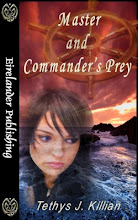
Coming soon, Master and Commander’s Prey from Eirelander Publishing
Mythology, whether it is the accepted form or of the author’s creation, must in some way, shape or form, be delivered to the reader. There are a few things it should include.
Who – who is the paranormal and how did they become that way.
What – Are they night loving vampires or baying at the full moon werewolves – this relates to the rules of the paranormal. All paranormal characters should have rules and at least one weakness, otherwise they are lawless, too super superheroes.
Where – the mythology is always attached to the world in which the paranormal is living.
When – Are they new to this or not. Where are they at in their development of powers and in respect to the powers-that-be.
Why – Why pulls it all together. Almost always, it relates to why the character is in the story. Are they an unfortunate soul who just got their freak on with a vamp and wound up undead? Has the character been charged with a duty, such as protecting the counterpart? I’ve always found it easiest to attach the paranormal’s GMC to the plot.
None of these points need to be over explained, but it does need to show up in the story. If it doesn’t, then how does the reader understand the basics of your paranormal character?
Have a great week and until next time, cheers and happy writing,
T.J.
www.tethysjkillian.com
Now available, Torrid Teasers #57 from Whiskey Creek Press Torrid
Coming soon, Master and Commander’s Prey from Eirelander Publishing
Subscribe to:
Posts (Atom)

 Posts
Posts


.jpg)
.jpg)


